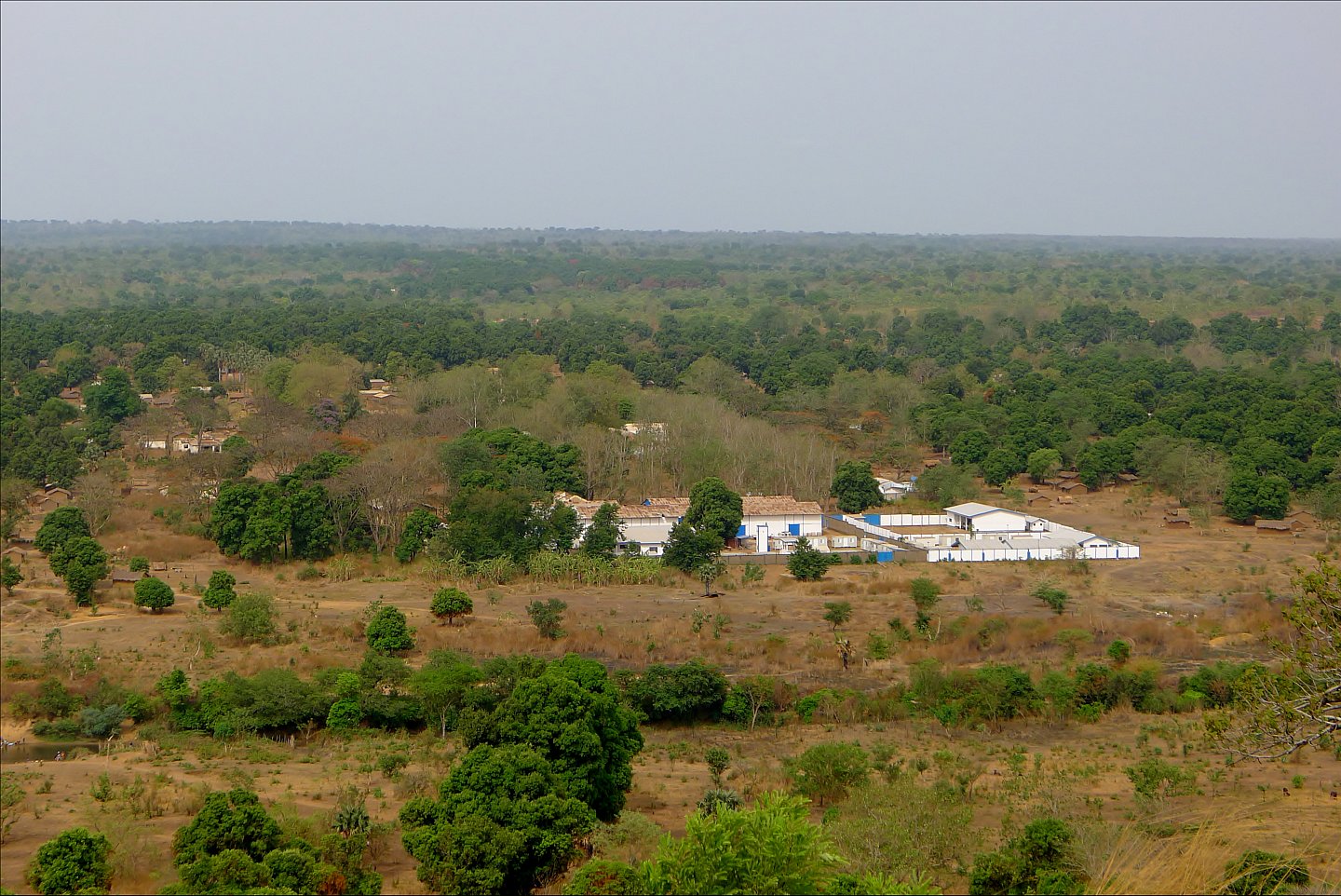
The Central African Republic (CAR) faced a devastating crisis in 2014, marked by widespread violence, political instability, and mass displacement. Armed conflict between rival groups left millions in urgent need of humanitarian assistance, with infrastructure in many regions severely damaged. The town of Kaga-Bandoro, a critical crossroads between the north and south, became a focal point for relief efforts. To support a sustainable UN presence in the region, the International Humanitarian Partnership (IHP) undertook a mission to establish a fully functional inter-agency office and accommodation compound.
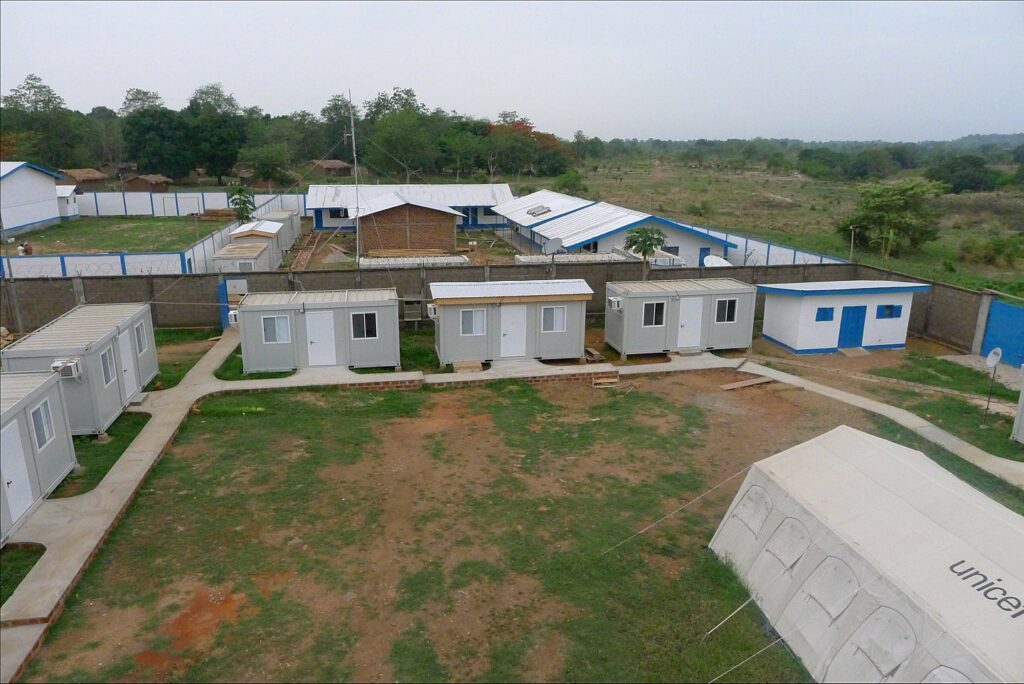
Led by MSB (Sweden), with support from DEMA (Denmark) and ASS-Lux (Luxembourg), IHP partnered with UNICEF, the implementing agency, and WFP, the requesting organization. The mission focused on renovating a dilapidated UN compound to provide facilities for over 40 humanitarian staff.
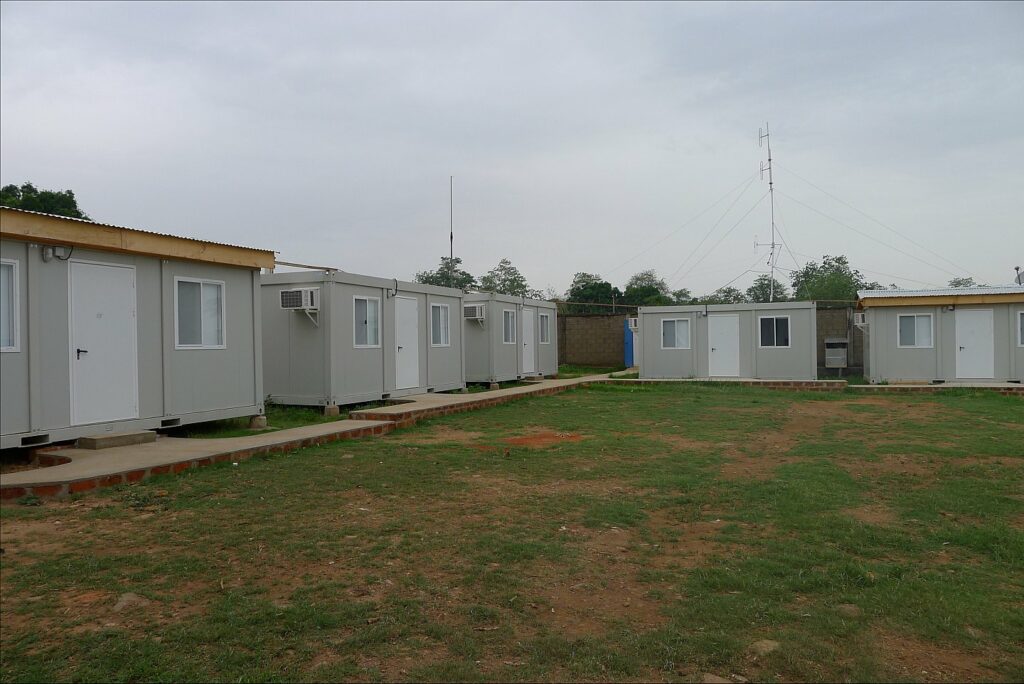
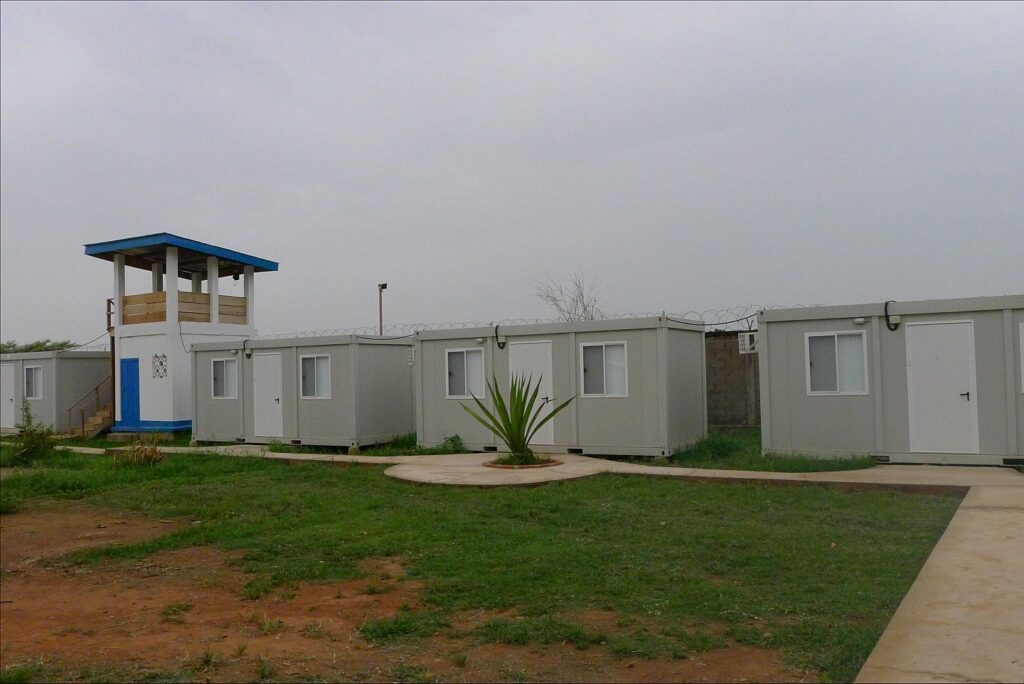
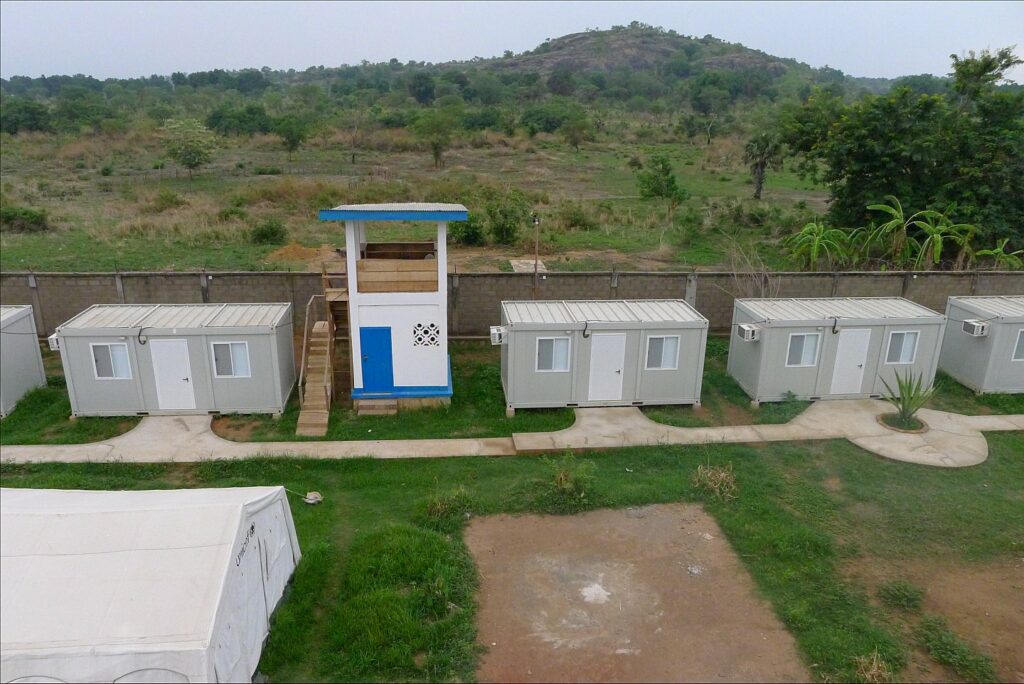
From June 2014 to May 2015, the IHP team installed 22 prefabricated houses and fully refurbished existing buildings to include office space, accommodation, and essential amenities such as toilets, showers, and a laundry room. The compound was equipped with generators, modernized electrical systems, and durable bricked and cemented walkways to withstand the heavy rains. The facilities became operational ahead of schedule, hosting personnel from UNICEF, WFP, WHO, UNFPA, OCHA, and NGOs like Save the Children.
The compound’s impact was transformative. It enabled humanitarian staff to live and work securely in Kaga-Bandoro, allowing for critical activities such as vaccination campaigns and emergency relief operations. As MSB Project Manager Niklas Hansson noted, “Sustainability and use of local capacity is key to a successful implementation.”
Challenges, such as extreme weather, logistics, and limited local resources, tested the team. Yet, their commitment to simplicity and adaptability ensured long-term functionality. Today, the compound stands as a vital hub for delivering life-saving aid, a testament to IHP’s dedication to supporting those in need.