On February 3, 2008, a magnitude 6.1 earthquake struck the Lake Kivu region in the Democratic Republic of Congo (DRC), located within the Western Rift of the East African Rift System. This region is a tectonic hotspot, where the Africa and Somalia plates are slowly moving apart at a rate of approximately four millimeters per year. Earthquakes in this zone, caused by both normal faulting and strike-slip faulting, are frequent due to the ongoing tectonic activity.
The 2008 earthquake occurred near the site of a devastating magnitude 7.6 earthquake in 1900 and within tens of kilometers from the epicenter of a magnitude 6.2 earthquake in October 2002, which had killed two people in Goma, the city closest to the epicenter. The latest earthquake caused significant damage, particularly in Goma, located on the northern shore of Lake Kivu. Several buildings were destroyed, infrastructure was disrupted, and the region, already struggling with the effects of ongoing conflict, faced severe challenges in providing relief to affected populations.
The immediate aftermath saw widespread panic and disruption in communication and logistics. Given the significant seismic activity in the region, coupled with the fragile infrastructure, the need for swift coordination and support was crucial for both emergency assessment and the delivery of aid.
IHP’s Support to UNDAC: Ensuring Connectivity in Goma
In response to the Lake Kivu earthquake, the United Nations Disaster Assessment and Coordination (UNDAC) team was swiftly deployed to Goma to assist with the assessment and coordination of relief efforts. However, the destruction of key infrastructure, including roads and communication networks, severely hampered effective coordination and response.
To address these challenges, the International Humanitarian Partnership (IHP) provided critical ICT (Information and Communication Technology) support to the UNDAC team. The IHP deployment included satellite phones, laptops, and internet access solutions, which were essential for re-establishing reliable communication channels in the affected region. With these tools, UNDAC could coordinate rapidly with local authorities, relief organizations, and international agencies, ensuring that emergency supplies were delivered to the right locations in a timely manner.
IHP’s support also ensured that real-time assessments could be conducted, enabling aid organizations to identify priority needs in affected areas. These efforts were instrumental in restoring coordination among relief teams and ensuring that life-saving assistance reached the most vulnerable populations.
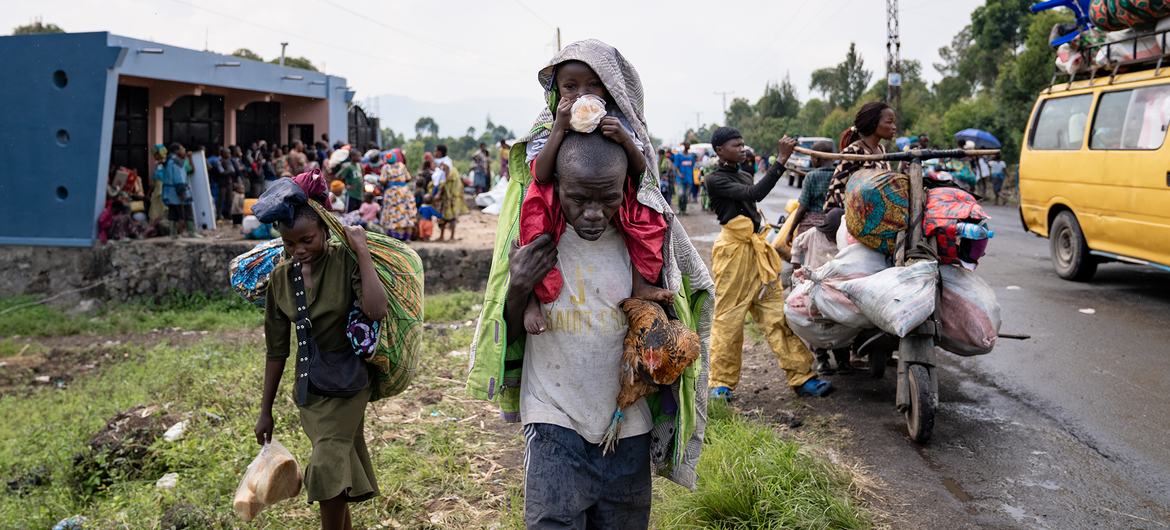
Cover Photo Credit: UNOCHA/Francis Mweze