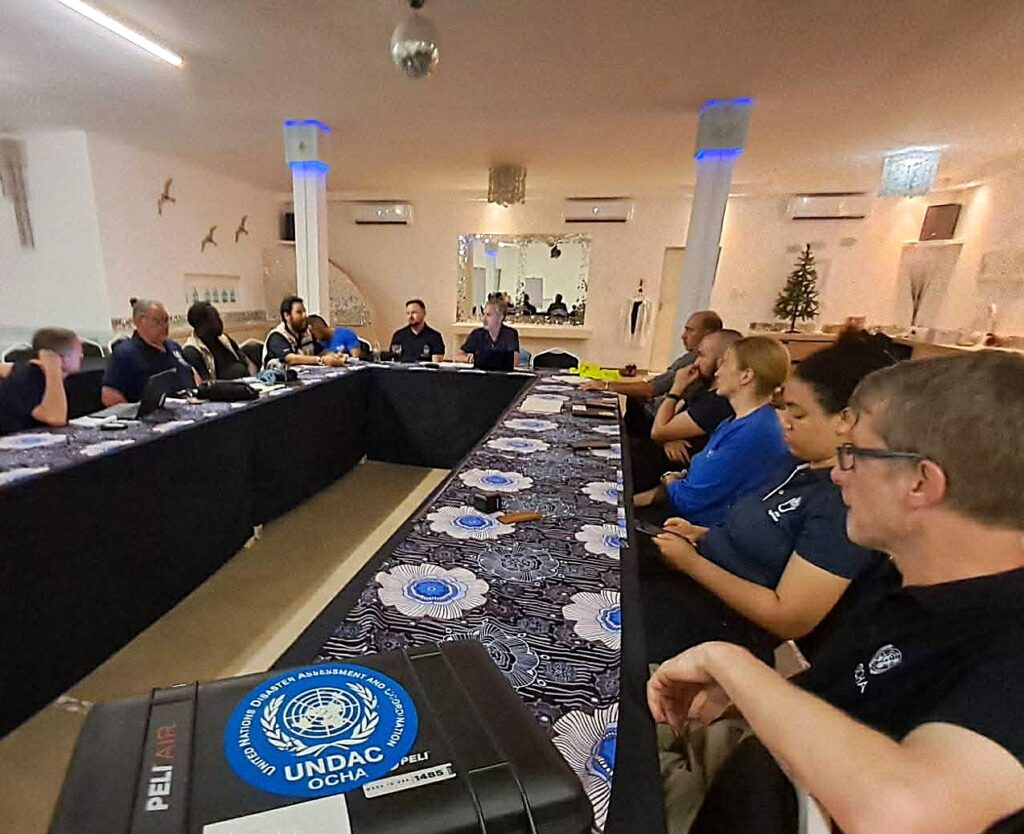
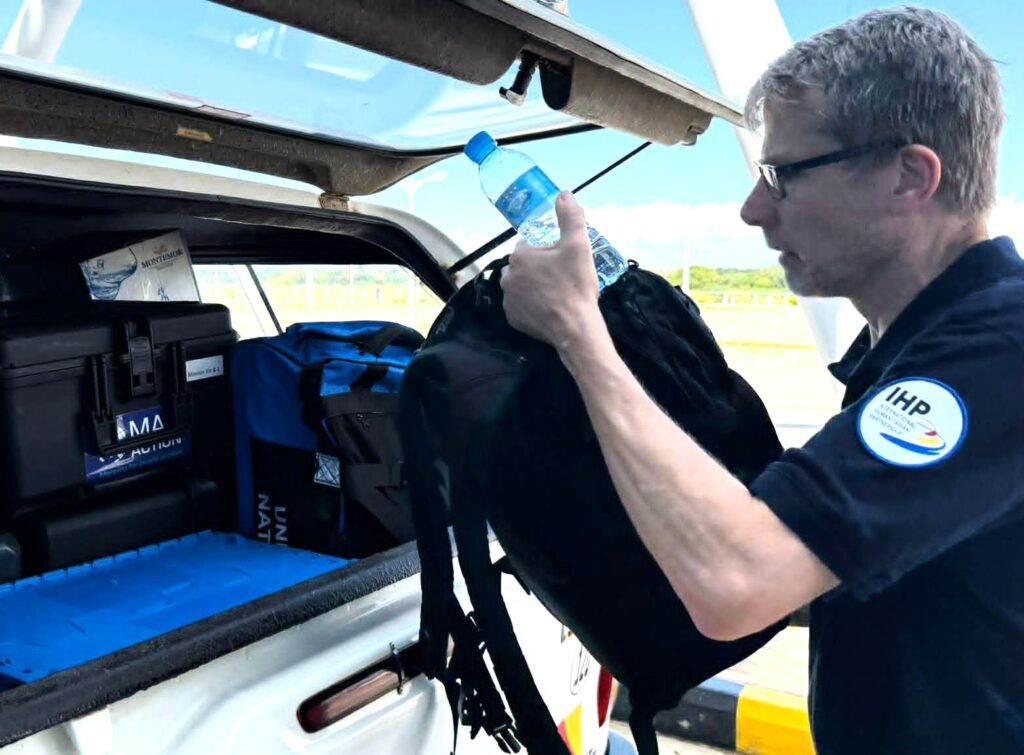
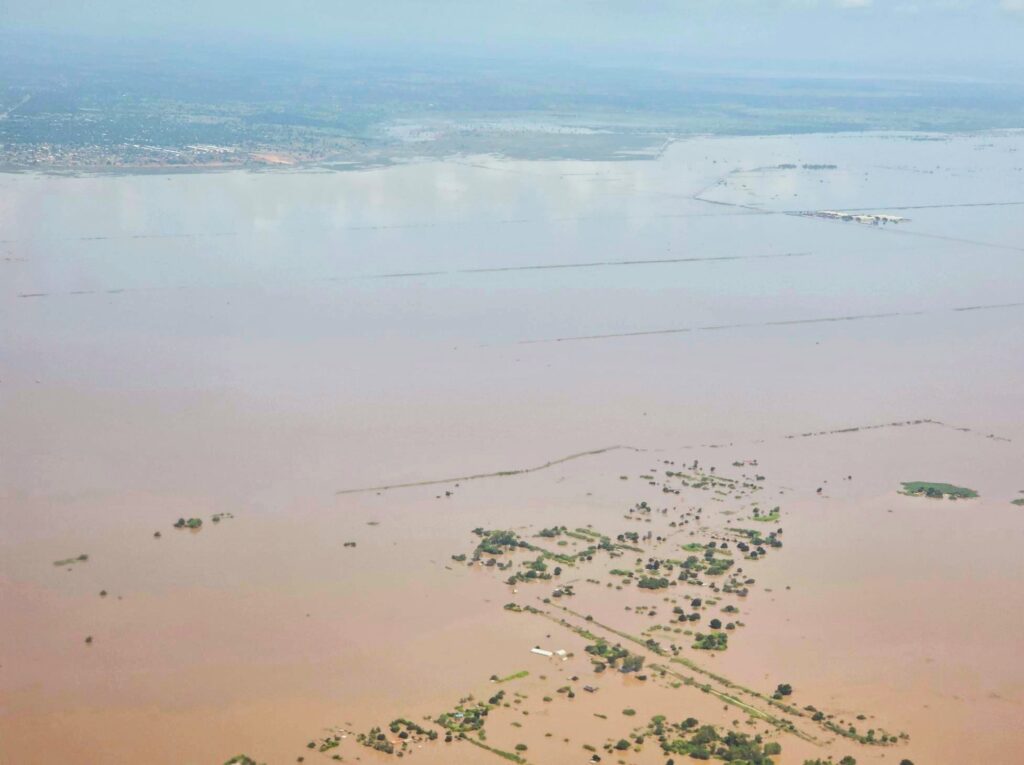
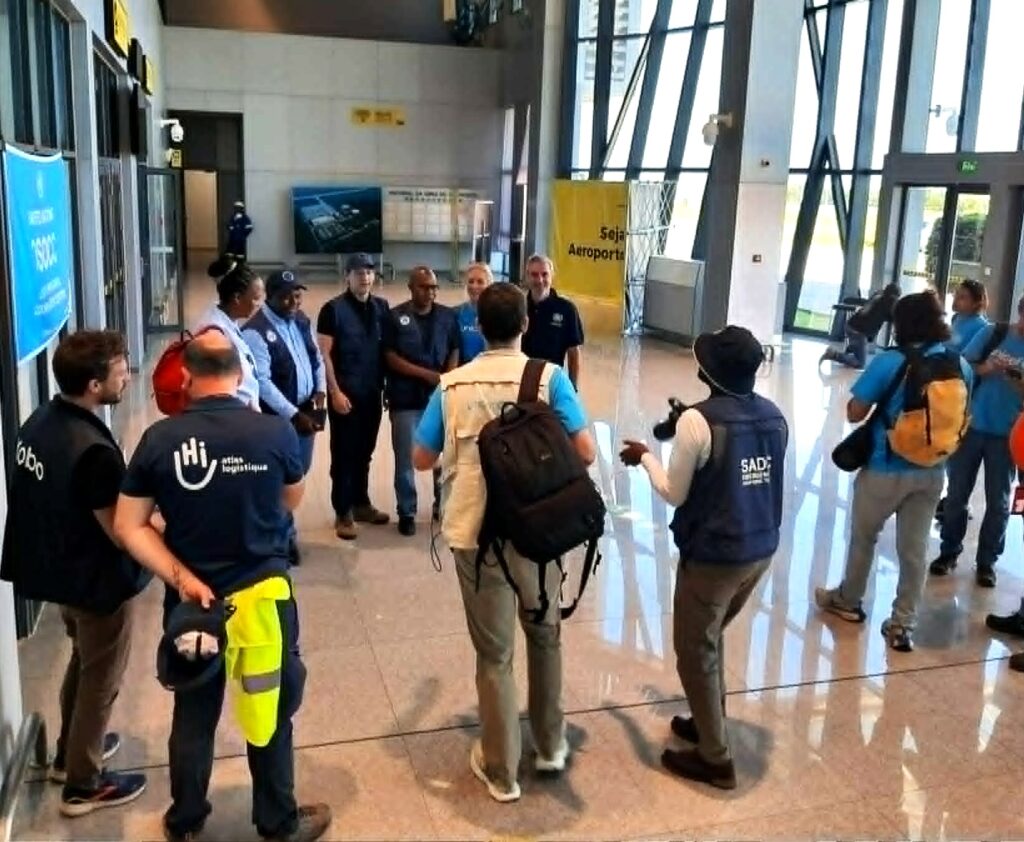
In January and February 2026, Mozambique was affected by severe flooding following persistent and intense rainfall during the first weeks of the year. The floods impacted several regions, disrupted livelihoods, and caused widespread damage to infrastructure, housing, and agricultural land. As a result, national authorities requested international support to strengthen coordination and response efforts.
At the request of OCHA, the International Humanitarian Partnership (IHP) deployed two experts to support the UNDAC team responding to the emergency. The deployment focused on providing operational ICT and office support, continuing IHP’s long-standing role—dating back to the late 1990s—in delivering rapidly deployable operational capacities in humanitarian crises.
The operation was carried out by two Norwegian experts deployed on behalf of IHP. They worked closely with the UNDAC team and other OCHA partners throughout the mission. A key contribution was technical and logistical support to the On-Site Operations Coordination Centre (OSOCC), which had to be relocated several times due to changing operational needs and field conditions.
The UNDAC team consisted of nine members, supported by seven additional staff from other operational partners. From the IHP side, a standard IHP ICT module was deployed. This included Starlink satellite connectivity to ensure reliable high-speed internet, UniFi systems for local area networking and wireless coverage, as well as printers and other essential office equipment. These capabilities were critical in enabling information management, coordination meetings, reporting, and daily operational workflows for the response teams.
Overall, the IHP support strengthened inter-agency coordination and operational continuity during a dynamic and challenging emergency response, contributing to more effective humanitarian action in support of flood-affected populations in Mozambique.
In response to the severe flooding that affected The Gambia in July and August 2022, IHP, with Norway’s contribution, played a pivotal role in supporting the United Nations Disaster Assessment and Coordination (UNDAC) team’s operations. The floods, which struck on July 30-31 and again on August 4-5, caused significant destruction across Greater Banjul, North Bank, Central River, and Upper River regions, displacing over 7,400 people and affecting more than 50,000 others.
Norway, through its participation in the International Humanitarian Partnership (IHP), responded by providing critical Information and Communication Technology (ICT) support to the UNDAC team on the ground. The floods caused widespread damage to infrastructure, including communication networks, making it difficult for relief teams to effectively coordinate efforts. To address this challenge, Norway deployed advanced ICT kits, which included satellite communication devices, mobile internet hotspots, and portable power solutions. This deployment enabled the UNDAC team to maintain reliable communication in the affected areas, ensuring that response teams could share data in real-time and make informed decisions.
The ICT resources provided by Norway were crucial in establishing a solid communications framework, which facilitated coordination between humanitarian organizations, local government agencies, and the affected communities. The secure and continuous communication allowed responders to assess the damage, prioritize relief needs, and mobilize resources effectively.
With limited infrastructure in place due to the floods, Norway’s contribution ensured that the UNDAC team could overcome connectivity barriers and support efforts to mitigate the crisis. This timely ICT intervention played a vital role in optimizing the response and ensuring that aid reached the most vulnerable populations in a timely manner.
The operational support provided by Norway, through IHP, enhanced the overall effectiveness of the humanitarian response in The Gambia.
Cover Photo Credit: UNOSSC
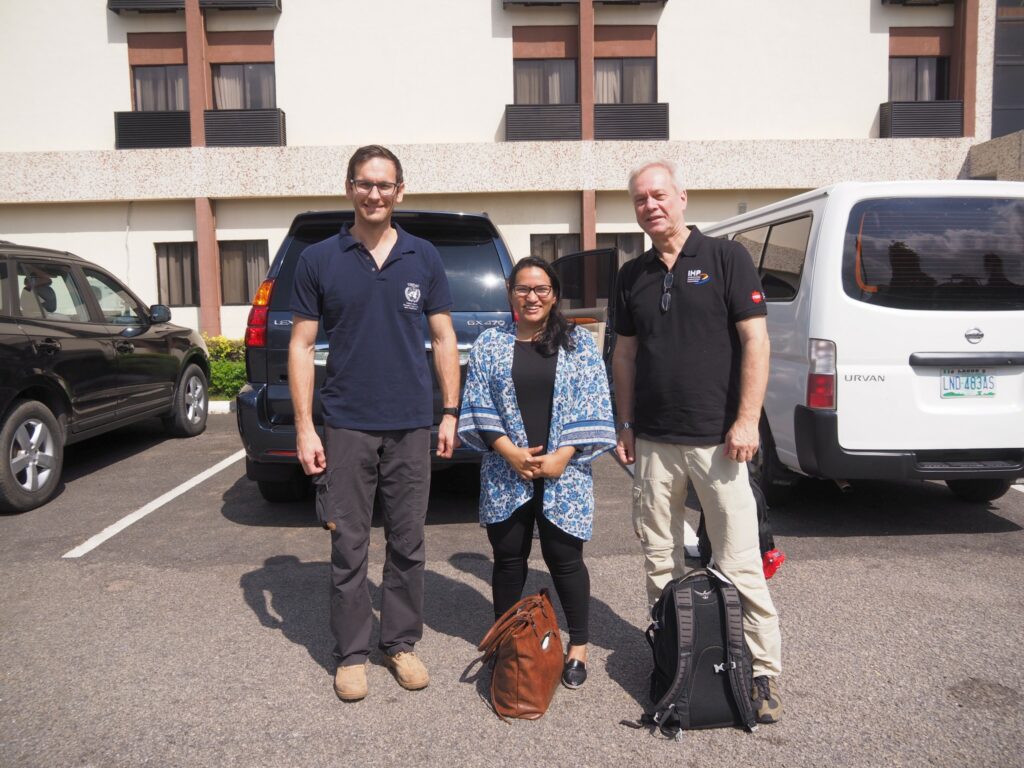
In late 2018, Nigeria faced severe flooding that impacted over 1.9 million people across twelve states, with four of these states declaring national disaster status. The floods resulted in widespread displacement, property destruction, and urgent needs for food, shelter, and clean water. In response to this crisis, the International Humanitarian Partnership (IHP) mobilized a team of experts to support the United Nations Disaster Assessment and Coordination (UNDAC) team, working in collaboration with Nigeria’s National Emergency Management Agency (NEMA).
IHP’s deployment included three ICT specialists from the Swedish Civil Contingencies Agency (MSB) and the Estonian Rescue Board (ERB), as well as an environmental expert. The team played a crucial role in establishing reliable communication systems, supporting coordination centers, and advising on environmental hazards due to the floods. These specialists provided technical assistance in challenging conditions, as power outages and equipment limitations hampered local operations.
The UNDAC team, working alongside organizations like MapAction, Atlas Logistique, REACH/IMPACT, and ECHO, divided into sub-teams to cover different affected regions. For example, Team B, stationed in Kogi and Edo states, faced logistical obstacles, including fuel shortages for generators, making it difficult to maintain a stable communication network. Despite these challenges, the team contributed to efforts that supported NEMA in resource allocation, response planning, and local capacity-building. This collaboration aimed to alleviate the conditions for nearly 800,000 affected individuals in hard-hit areas, despite limited transportation resources and ongoing power shortages.
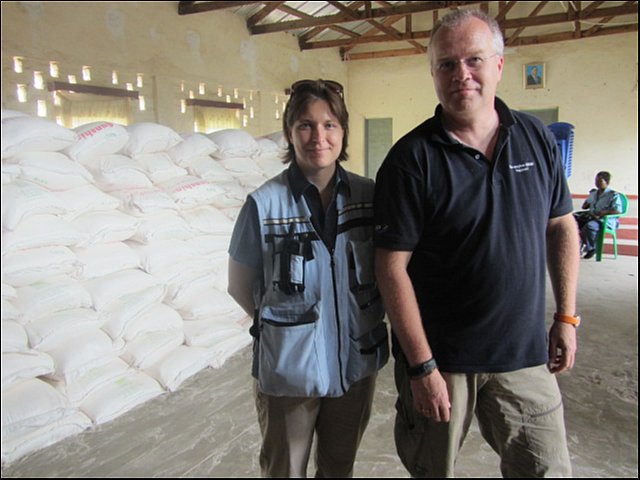
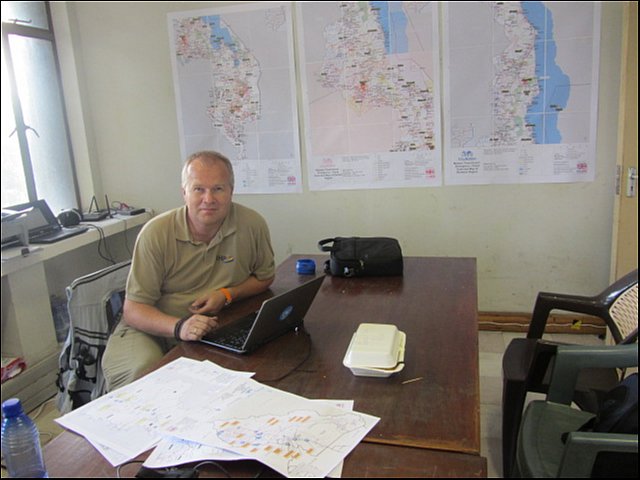
In January 2015, Malawi experienced devastating flooding that affected over 1 million people, displaced more than 336,000, and resulted in 100 fatalities. The floods caused widespread damage to crops, livestock, and infrastructure. In response to a request from the Malawian government, an UNDAC (UN Disaster Assessment and Coordination) team was deployed by UN OCHA to assess the situation and provide guidance.
The International Humanitarian Partnership (IHP) played a critical role in supporting the mission by deploying experts from DEMA (Denmark), DSB (Norway), and MSB (Sweden). IHP facilitated effective coordination and communication by providing ICT equipment and expertise, enabling humanitarian partners to gather and share vital information about the affected population and prioritize relief efforts.
Initially planned for three weeks, the UNDAC mission was extended, prompting additional IHP personnel deployments, including support from MSB and THW (Germany). IHP Chairperson Trygve Bruun highlighted the partnership’s ongoing commitment to supporting UNDAC missions with coordination expertise and ICT solutions, reinforcing its core role in emergency response operations.
Cover Photo Credit: UN Malawi
Cover Photo Credit: OCHA/Saviano Abreu
In July 2010, Pakistan experienced one of the worst natural disasters in its history as unprecedented monsoon rains triggered catastrophic flooding across the country. The disaster affected over 20 million people, displacing entire communities, destroying homes, infrastructure, and livelihoods. The Indus River overflowed, submerging villages, washing away roads, and cutting off access to food, water, and medical supplies for millions. According to the United Nations, over 1,700 lives were lost, and millions faced long-term challenges, from homelessness to the threat of disease outbreaks like cholera.
The scale of the disaster overwhelmed Pakistan’s national response capabilities, prompting a massive international humanitarian effort. Relief agencies, including UN OCHA (United Nations Office for the Coordination of Humanitarian Affairs), mobilized to coordinate aid delivery and meet the needs of flood-affected populations. Central to these efforts was the International Humanitarian Partnership (IHP), whose mission was critical in enabling coordination and communication in an environment crippled by devastation.
IHP’s Support to UN OCHA: Deploying ICT Modules
To support UN OCHA in its response, the IHP swiftly deployed three Information and Communication Technology (ICT) modules from Norway, Sweden, and Denmark. These modules, which arrived in Pakistan on August 22, 2010, were designed to provide crucial communication capabilities in a country where infrastructure had been severely damaged by the floods.
Each ICT module was accompanied by a technical specialist and was equipped with laptops, GPS devices, satellite phones, and digital cameras to enable UN teams to assess needs and coordinate relief efforts in real-time. The modules allowed UN teams to establish reliable communication lines, set up internet access, and operate across multiple locations simultaneously.
Nicolai Rauhe Kristensen, the IHP Project Manager for this mission, emphasized the importance of this support: “The IHP is dedicated to assisting UN OCHA in this emergency, and I am sure the team and the equipment will assist in the overall effort of coordinating the relief to flood victims.”
After a three-week deployment, the ICT modules were handed over to UN OCHA, with local staff trained to continue their operation. This transfer ensured that the technology could support ongoing relief efforts beyond the initial emergency phase.
Establishing a Base Camp: Housing Humanitarian Efforts
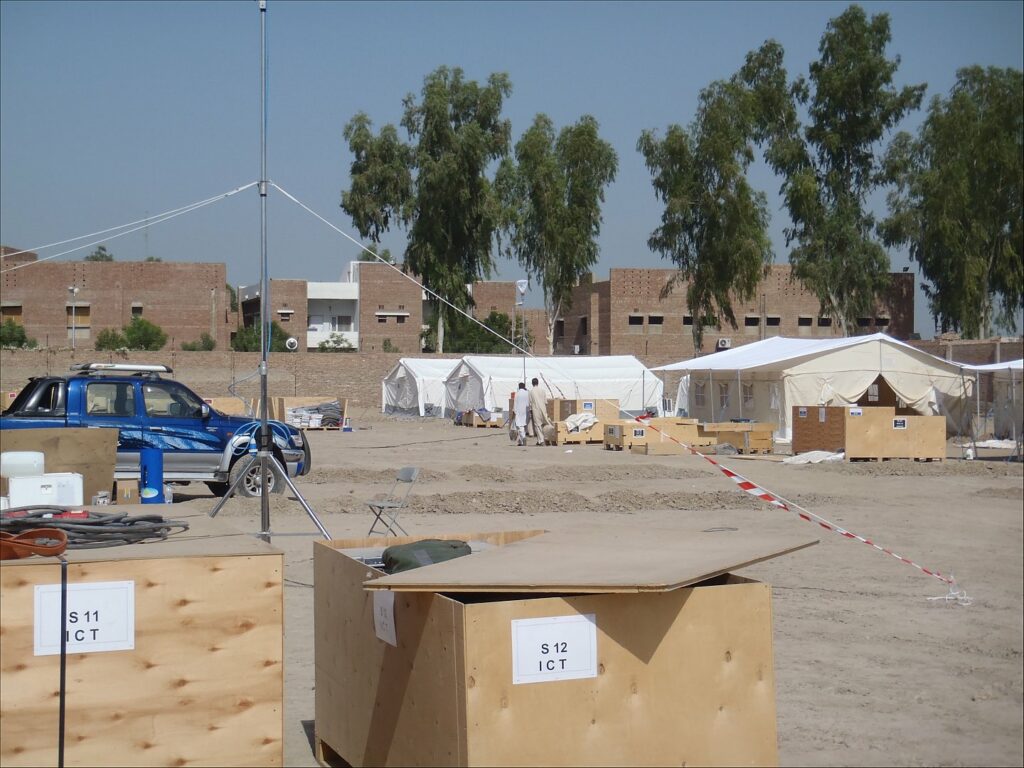
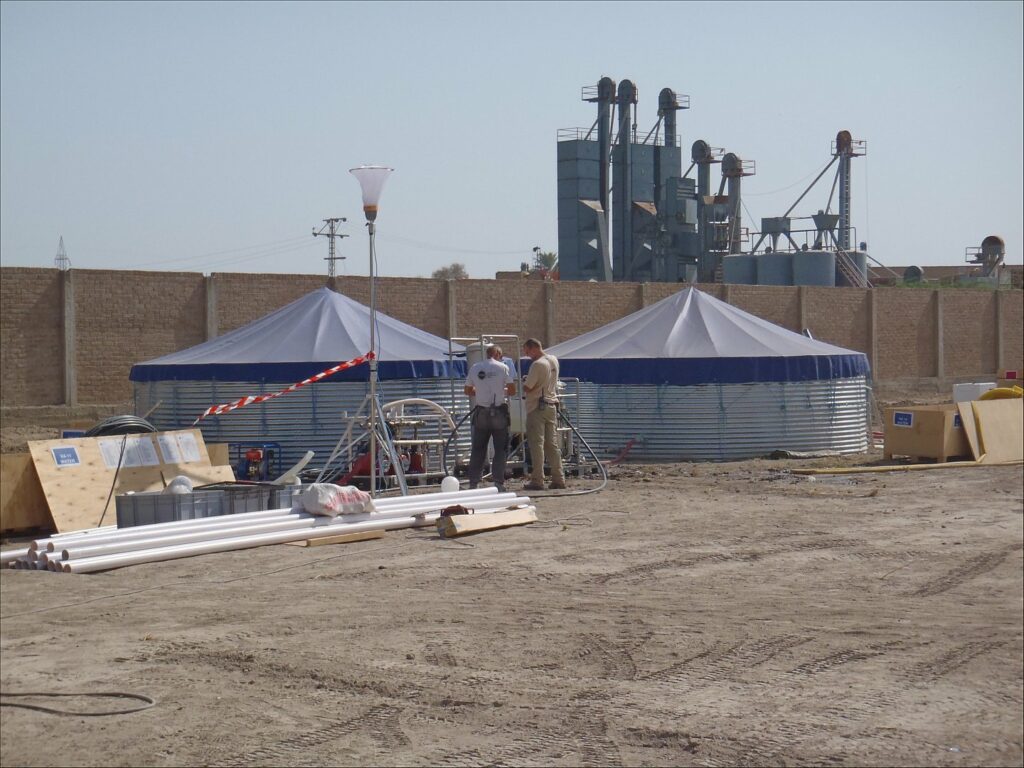
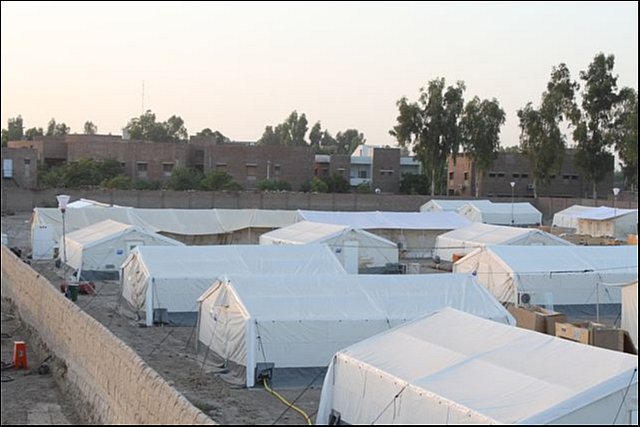
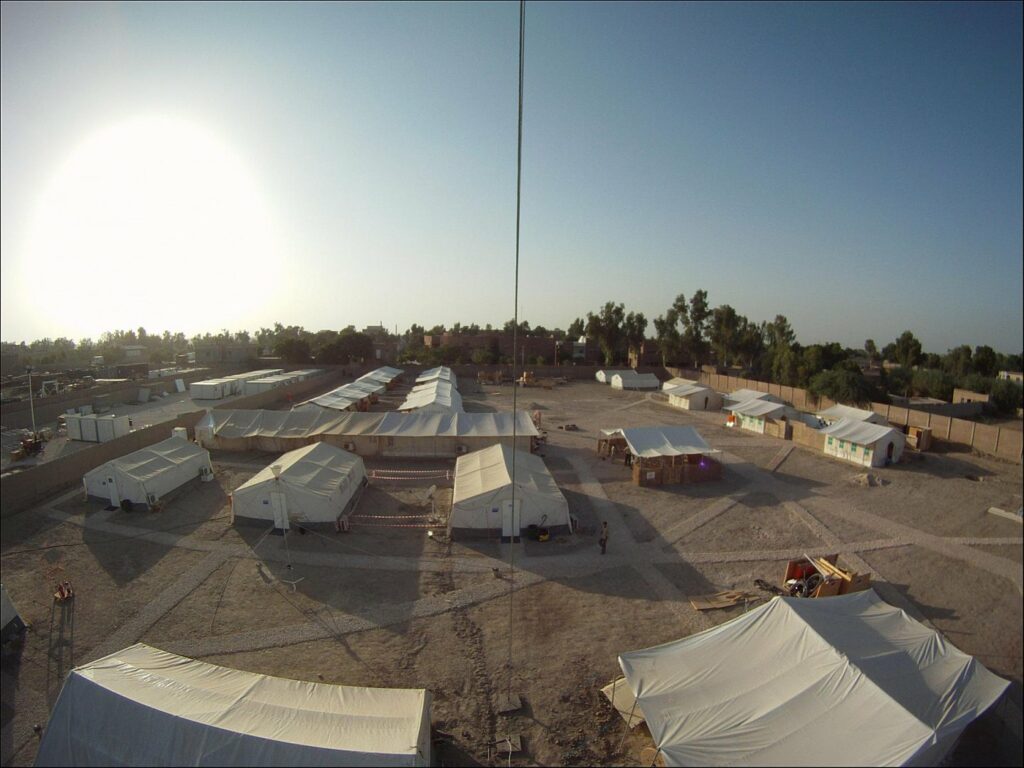
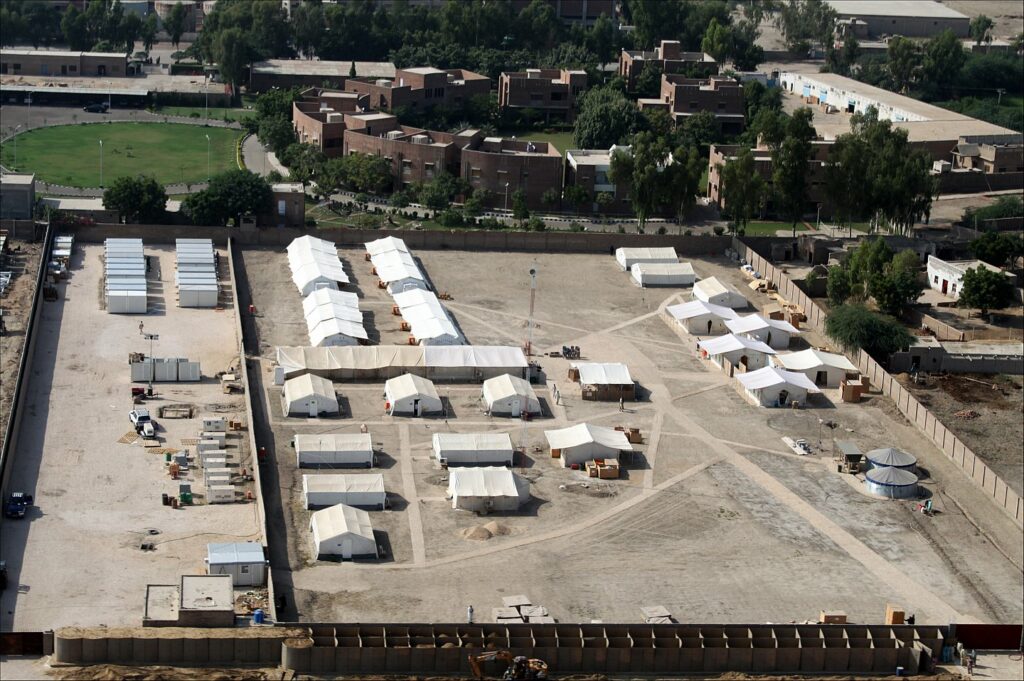
In addition to communication support, IHP responded to a UN request to establish a base camp in the southern part of Pakistan. This camp, which could house 70 international aid workers, was essential for coordinating relief efforts on the ground.
The base camp served as a hub for humanitarian operations, providing accommodation, office spaces, and kitchen facilities for aid workers. It also housed an On-Site Operations Coordination Centre (OSOCC), enabling UN agencies and partner organizations to plan and execute relief strategies in the affected region effectively.
The mission was a multi-country effort, with the camp equipment departing from Sweden on a flight funded by Great Britain. Personnel from Sweden, Norway, Estonia, Finland, and Denmark joined the operation, ensuring that the camp became fully operational shortly after its arrival in Pakistan.
To respect cultural considerations during Ramadan, the deployment of personnel was carefully timed to begin after the end of the holy month, ensuring smooth customs clearance and integration into the local context.
A Long-Term Commitment
The IHP base camp was operational for approximately six months, reflecting the long-term nature of the humanitarian response to the floods. By providing essential infrastructure and communications support, IHP enabled aid workers to deliver life-saving assistance to millions of flood-affected Pakistanis.
This mission showcased the strength of the IHP’s collaborative model, with resources and expertise from multiple member countries combining to meet the demands of a large-scale humanitarian crisis.
As in previous emergencies, the “IHP spirit”—marked by teamwork, adaptability, and dedication—was at the core of the operation. By empowering organizations like UN OCHA, IHP reinforced the global commitment to helping those in need, even in the most challenging circumstances.
Cover Photo Credit: UN Photo/WFP/Amjad Jamal
Cover Photo Credit: NASA image created by Jesse Allen, using data provided courtesy of NASA/GSFC/METI/ERSDAC/JAROS, and U.S./Japan ASTER Science Team.