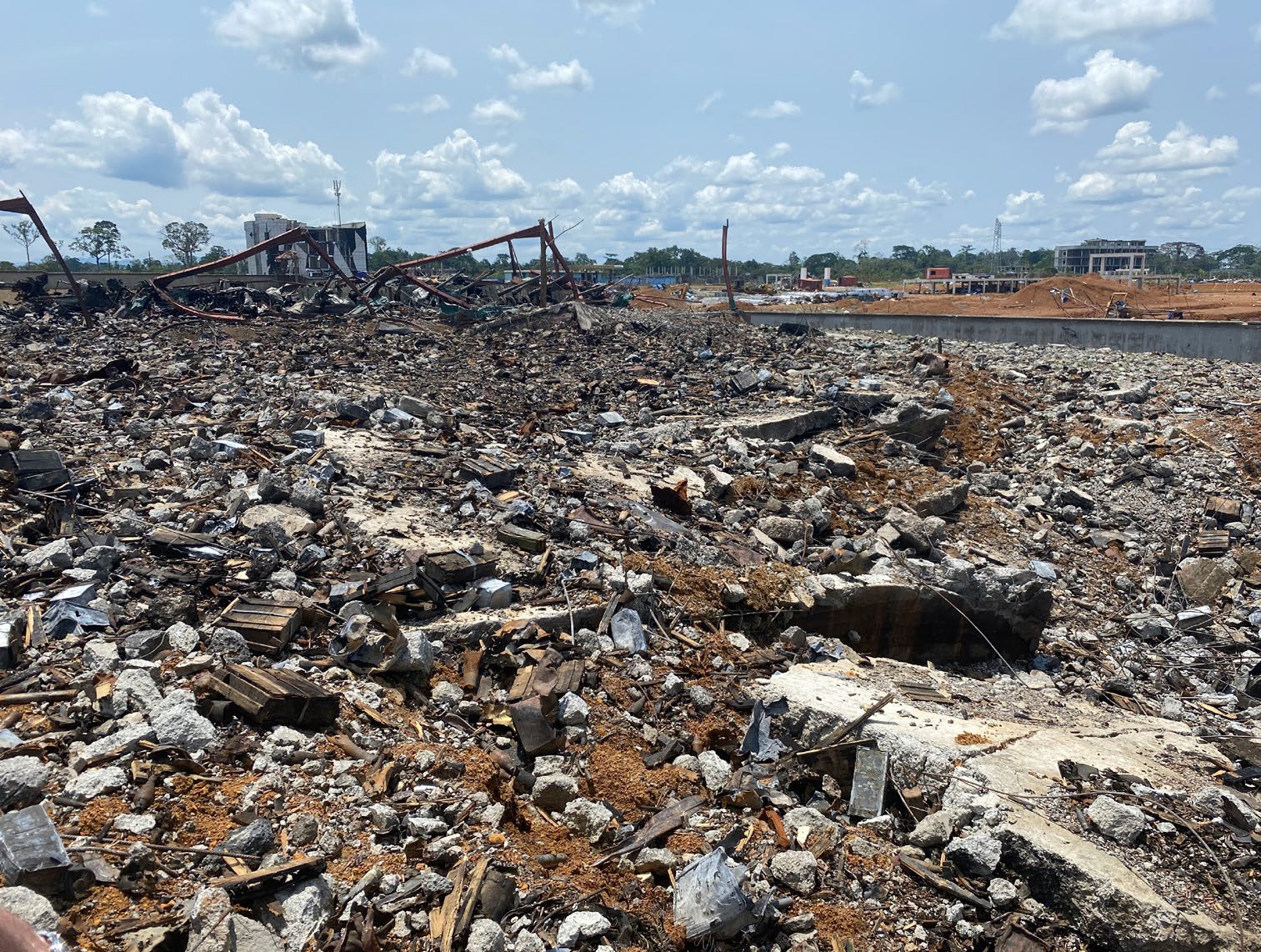
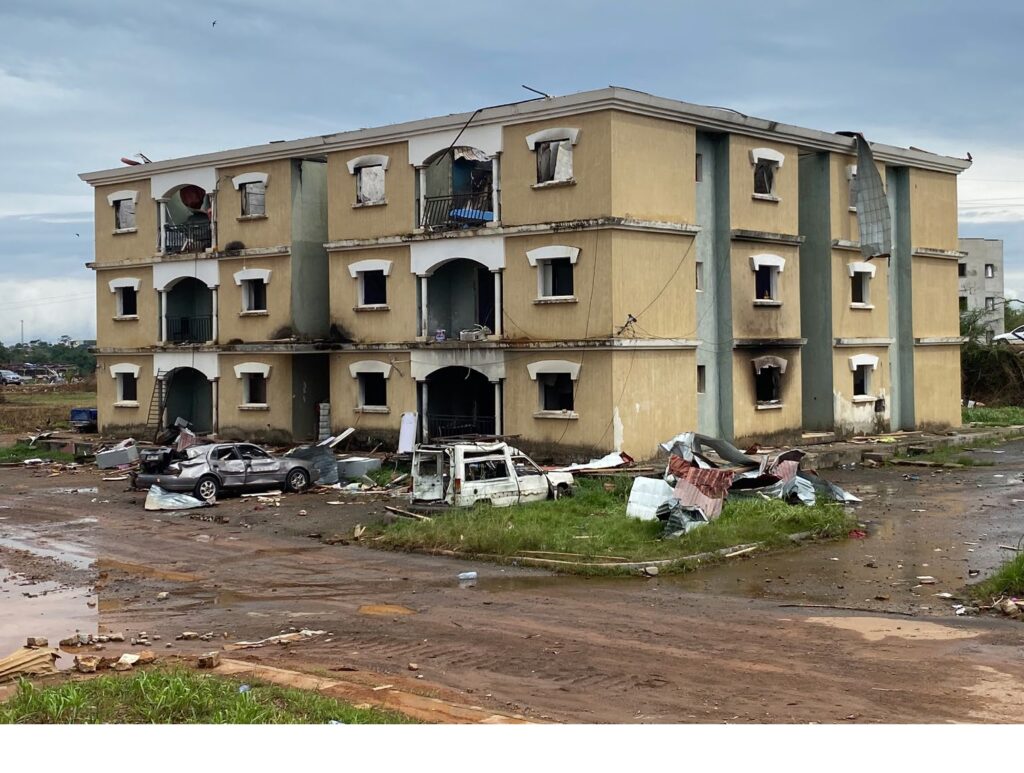
On 7 March 2021, a series of explosions rocked the city of Bata, the second-largest city in the Republic of Equatorial Guinea, after ammunitions depots near military barracks exploded, causing widespread devastation. Residential buildings, a newly built hospital, and surrounding infrastructure were severely damaged. Initial reports indicated at least 15 fatalities and around 500 injuries, with the numbers later rising to over 100 deaths and several hundred injuries.
In response to the catastrophe, the Minister of Foreign Affairs consulted with the UN Resident Coordinator, who forwarded a request to OCHA’s Emergency Services Branch (ESB) for the deployment of a United Nations Disaster Assessment and Coordination (UNDAC) team. On 8 March, a call for urgent medical assistance and support for water, sanitation, and health (WASH) services was issued through the European Civil Protection and Humanitarian Aid Operations (ECHO). At the same time, OCHA contacted the International Humanitarian Partnership (IHP) countries for ICT support to aid the UNDAC team’s operations.
IHP members quickly mobilized, and on 9 March, OCHA confirmed the need for a dedicated ICT support team to assist with tasks related to damage and needs assessments, coordination, and information management. The Swedish Civil Contingencies Agency (MSB) and the Emergency Services Academy Finland (ESAF), both IHP partners, responded rapidly by sending four ICT experts, two from Sweden and two from Finland. The team brought essential ICT equipment, including telecommunication and internet infrastructure, to assist the UNDAC team in setting up office spaces and facilitating logistical and administrative support.
The deployment was swift, with the experts departing from their home countries on 11 March, meeting the UNDAC team en route, and arriving in Equatorial Guinea on 12 March. The deployment was initially expected to continue until 4 April 2021, providing critical ICT support for the UN’s coordination efforts during the emergency response.
IHP’s rapid mobilization and support were instrumental in ensuring that the UNDAC team could operate effectively, assess the damage, and coordinate humanitarian assistance in the wake of the disaster.